

- Ask the Architect-NEW!
- Bathroom – Barrier Free
- Builders Risk Insurance
- Building Material Supplies
- Building a House Step by Step
- Carpentry
- Construction Loans 1
- Cost Estimating Explained
- Cost to Build a House
- Cost to Build by State
- Cracked Flue Liner
- Credit Score Shapeup
- Elevators
- Energy Efficient Homes
- Fire Sprinkler Systems
- Flooring-Concrete Finishes
- Foreclosures
- Foundation & Basement Information
- Gas Fireplaces
- Getting Licensed
- Heat Pumps
- Home Building Budget
- Hot Water Recirculation
- House Plans, Reading
- ICF - Insulated Concrete Forms
- Insulation-Calculator
- Interior Wall Paneling
- Kitchen 1- Design
- Know Your Housing Market
- Landscaping-Xeriscapes
- Log Homes
- Modular vs Stick Built
- Mold Resistant Drywall
- Mortgage Free House
- Octagon Homes
- Paving Mountain Driveways
- Permits, Fees, Surveys
- Plumbing Category Index
- Radiant Heating
- Remodeling & Additions
- Roofing Cost
- Shell Builders
- Siding-Cement
- Skylights-1
- Solar Modules
- Stair Building and Design
- Steel Framed Homes
- Structural Insulated Panels (SIPs) 1
- Stucco
- Subcontractors
- Tankless Water Heaters
- Title Insurance
- Utilities (electric, gas, phone)
- Well & Septic
- Which Window is Best?
- Wind Power
- Yurt Homes
- CLICK HERE FOR HUNDREDS OF MORE CATEGORIES
- Build a House
Crawl Space Vents
Crawl Space Vents
Summary:
Whether crawlspace ventilation is necessary (or even detrimental) is a hotly debated topic among building scientists. Especially in humid climates, ventilating the crawlspace often adds undesirable moisture to the area.
New products provide mechanical ventilation as that measure the moisture content of outdoor and crawlspace air and only provide ventilation when the outdoor air is drier than crawlspace air. Thus, systems prevent moisture from being added to the crawlspace due to ventilation.
(Note: You still need, in my opinion, to install a high-performance vapor barrier over the soil in the crawl space in addition to the building code-required foundation vents. Carl)
Sensors and/or computer software monitor temperature, relative humidity, and water vapor in the crawlspace and the outdoor air to determine when ventilation will have a beneficial effect on crawlspace moisture and initiate ventilation when outdoor temperature is above a preset minimum.
"In the typical ventilated crawl space all vents are closed except two. The vent where the fan is installed is left open and also one on the opposite side of the home. This creates good cross flow and allows air to be circulated past the temperature/humidity sensor."
Ventilation can be initiated to decrease or increase crawlspace relative humidity.
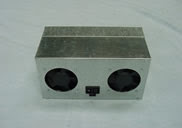
When the outside air has less moisture than the crawlspace air, a fan exhausts the crawlspace air and replaces it with drier outdoor air. In addition to removing moisture, the fan can also help remove gases, odors, or radon that could migrate into the home.
Units are designed to fit within traditional masonry wall foundations.
Courtesy of Smartvent Courtesy of Smartvent
Path Attributes
The system reduces moisture in the crawlspace so related conditions like mold and wood decay may be eliminated.
Ease of Implementation
One system is secured in place with mortar, very similar to the installation technique for metal, louvered vents. The system requires an electrical receptacle (the unit has 40 watt draw).
Initial Cost
The systems range in price from $225 - $500, dependent upon the number of sensors and sophistication of the controls. Mechanical crawlspace ventilation cost is more than four times the cost of passive devices.
Systems use very little electricity when the fan is not ventilating. When ventilating, the fans draw40-60 watts each and vary by manufacturer. Although there is some cost associated with operating the fan and controller, systems can improve whole-house energy efficiency and durability.
Section R408 of the International Residential Code 2003 (IRC) covers ventilation openings in crawlspace foundations. The code allows an exception to standard passive ventilation practice if continuously operated mechanical ventilation is provided at a rate of 1.0 cfm (10m2) for each 50 square feet (1.02 L/s) of underfloor space where the ground surface is covered with an approved vapor retarder material. One 60 cfm system would meet this code provision for a foundation sized 30 feet by 40 feet by 2.5 feet.
Installation time varies by system selected and foundation. Usually one ventilator is adequately sized for a foundation. Systems can be hardwired or connected to a standard receptacle. Consult manufacturer’s installation guides for specifics.
SmartVent® offers a two-year warranty.
By managing crawlspace moisture, powered ventilation can help mitigate potential risks of mold and decay due to moisture.
Initial cost and the cost of operation are greater than passive ventilating louvers, but systems may improve the durability of crawlspaces and floor systems.
Disclaimer: The information on the system, product or material presented herein is provided for informational purposes only. The technical descriptions, details, requirements, and limitations expressed do not constitute an endorsement, approval, or acceptance of the subject matter by the U.S. Department of Housing and Urban Development (HUD/FHA), The Partnership for Advancing Technology in Housing (PATH), or any PATH-affiliated Federal agency or private company. There are no warranties, either expressed or implied, regarding the accuracy or completeness of this information. Full reproduction, without modification, is permissible. NAHB Research Center.


