
Summary: A roofing cost estimator or a roofing cost calculator can give you an approximate estimate of roofing costs for new homes or for remodeling an older home.
One of the most expensive costs of building a new home or remodeling an old home is the cost of roofing. Roofing cost is based on the cost of roofing materials, roof pitch, and labor.
Roofing is measured and estimated in squares. A square of roofing is the amount of roofing material required to cover 100 square feet (10 feet X 10 feet). That isn’t as simple as it sounds when you have multiple roof pitches and dormers, unless you are a whiz in geometry.
I advise having either your supplier or your roofing contractor do this estimate. They won’t be exact either, but may come a little closer than you will, though you might want to make your own calculations and see how they compare.
NOTE: At the bottom of the page you will find a FREE roofing cost calculator.
With the roofing calculator you can estimate the approximate cost of new roofing for a new home or the approximate replacement roofing cost for an older home. It gives you a rough estimate that you can use to compare with estimates from roofing contractors.
Understanding how roof pitch and shingle weight affect the cost of roofing is important.
Weight:
The cost of shingles or other roofing materials increases as their quality (weight) increases.
The cost of the labor to install shingles or other roofing materials also increases as their weight increases.
Pitch:
Roofing installation labor increases dramatically as the pitch of the roof increases.
It is my professional opinion that roof pitch affects replacement roof costs and new home roof costs more than anything else.
Roof pitch is indicated by a number over a number.
Common pitches are 3⁄12, 4⁄12, 5⁄12, 6⁄12 and so on. The higher the top number, the steeper the pitch.
A way of explaining this jargon would be:
The pitch of a roof = the rise of the roof in inches over (/) each foot of span (horizontal travel). (See images below)
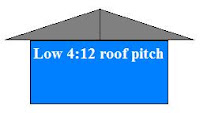

Images courtesy of NewEnglandMetalRoof.com
For example: A 4⁄12 pitch, or a 4 over 12 pitch, would mean that there is a rise of 4 inches for every foot measured from the outside edge of the roof towards the center of the roof (horizontal span).
It is interesting to note that the square feet of shingles (squares) required increases dramatically as the pitch increases. A 12⁄12 pitch contains twice as much shingle area as a 6⁄12 pitched roof!
Roofing contractors charge according to the shingle weight and the roof pitch because the steeper the pitch and the heavier the shingle, the harder their job is.
I think roof design is the most important component of home design.
I think that heavier shingles and steeper pitches look great and add curb appeal… if you can afford it.
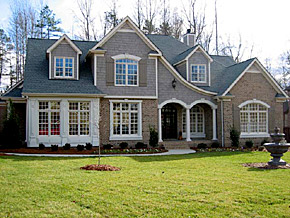
It is a real estate fact of life that great curb appeal adds to resale value.
Warranties:
Asphalt shingles and fiberglass shingles are warranted according to their weight.
The least expensive lighter weight shingles carry a 15 year warranty while the heavier more expensive shingles are warranted for up to 25 years.
Tip: Chimneys should be built (finished) before the area surrounding the chimney is shingled.
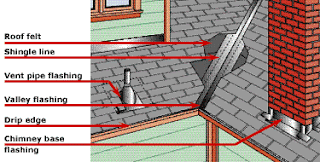
This will allow placement of sheet metal flashing around the chimney for waterproofing, and will also avoid damage to the shingles.
Note: While your carpenters are responsible for flashing around doors and windows, your roofing contractor is responsible for flashing around any and all roofing junctures. If you get a leak from the roof area, who are you going to call? Certainly not your carpenters. Roofers should guarantee their work.
A prefab fireplace chimney flue should also be installed at this time.
Roofing, or finishing the roofing follows completion of chimneys and flues.
Dormers:
Dormers are not only attractive, they assist in adding inexpensive living space! The house in the photo above has very attractive dormers.
But dormers are a bit expensive to build and a steep pitched roof is required to gain that extra living area. But I found that the trade-off for that extra space is worth it.
Professional Roofers:
Roofing is not one of those jobs where you want to save money by doing your own labor.
Roofing is a very dangerous job! Hire a Professional!
Always check to be sure that your roofing contractor is insured!
Always ask contractors to see their Certificate of Insurance and read my information on Subcontractor Insurance.
Get at least 3 roofing cost estimates, in writing, specifying exactly the same products and services.
If you are interested in metal roofs, be sure to read Metal Roofing - Metal Roofing Cost.
Metal roofs are quite striking and can last for 50 years.
FREE Roofing Cost Estimator: Click here for a FREE, very simple and easy to use Roofing Cost Estimator for almost all types of roofing materials, from New England Metal Roof.
Carl Heldmann 2017
