Roof and Attic Ventilation

Roof & Attic Ventilation is Important

I learned very early in my home building career (the hard way, of course) that proper roof & attic ventilation is very critical.

Proper attic ventilation extends the life span of the roof framing and shingles by decreasing moisture and heat buildup. Moisture and heat buildup in your attic also increases the cost of heating and air conditioning, causes wood to rot, metal to rust, mold formation, and in colder climates, even causes ice dams.

There are other problems with inadequate attic ventilation, but these should be enough reasons to make you, as you the General Contractor, be concerned and make sure your carpenters and roofers provide for adequate attic/roof ventilation.

Air Vent, Inc. has a very informative web site on Attic Ventilation, as well as Whole House Fans & Power Vents.

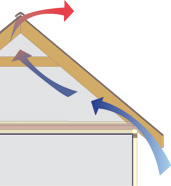
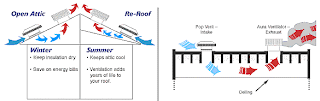
Utilization of Ridge Vents for exhaust and Soffit or Under Eave vents, or Vented Drip Edges for air intake, can provide continuous air flow minimizing the buildup of heat and/or moisture without the use of anything but Mother Nature. That simply means, “Heat Rises”.


Here is an illustration of the theory, courtesy of Air Vent, Inc

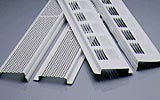
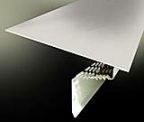
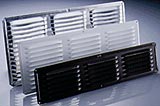
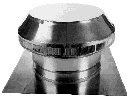
Here are pictures of the four types of vents, 1. Ridge Vent 2. Soffit Vent 3. Vented Drip Edge 4. Under Eave Vents courtesy of Air Vent, Inc.

1. 2. 3.
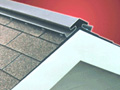
4.

And, here is an excellent report on the subject from NAHB Research Center.

Take heed! I learned things the hard way. With my blog, books and www.byoh.com, you don't have to.

Carl

Summary:

The combination ventilation and drip edge system is an innovative approach to providing continuous attic air intake vents on homes with no eave overhangs. This type of vent remains hidden behind the gutter and does not detract from the architecture of the home. The use of ventilation and drip edge systems combines the steps of installing attic intake ventilation and drip edge, which directs rainwater flow from the roof into the gutter and saves installation time.

Roof and attic ventilation allows excess heat and moisture to escape from the home to reduce summertime cooling costs, pre-mature deterioration of roofing materials and moisture condensation that can lead to costly repairs. An effective attic ventilation system relies on natural convection to pull air into the attic from a low position, commonly through vents in a soffit, and exhaust heated attic air through a vent at a high position, such as through gable or ridge vents.

Many new and existing homes do not have soffits, or their architectural style may not permit perforations in soffits for ventilation. Instead of sacrificing a proper ventilation system, builders and owners of these types of homes can install ventilation and drip-edge systems to improve the effectiveness of attic ventilation.

Ventilation and drip edge systems are made of either extruded vinyl or roll-formed aluminum and are manufactured in five or eight foot sections. They are designed to allow air into an attic or roof assembly from an inconspicuous location and simultaneously force roof runoff away from fascia boards and into the gutter. Manufacturers of ventilation and drip edge systems inform they work most effectively when installed in conjunction with exhaust vents located at or near the peak of a roof.

PATH Attributes:
* The system is relatively inexpensive and savings from improved efficiency can overshadow the cost.
* By allowing natural ventilation to occur and help regulate temperature and moisture in the attic, heating and cooling loads due to the attic can be reduced.

Ease of Implementation:

Ventilation and drip edge systems are available throughout the United States by direct order from the manufacturers or their national distributor and supply companies. They are available in white, brown, and black finishes.

Initial Cost:

The product retails for about $2.00 to $3.00 a linear foot.

U.S.Code Acceptance:

Ventilation and drip edge systems meet minimum building code attic ventilation requirements of one square foot of net free venting area for every 150 square feet or 300 square feet of attic floor area.

Installation:

In new construction, roof sheathing is installed three-quarters to one inch away from the fascia. In existing homes, installation begins with cutting existing roof sheathing back three-quarters to one inch from where it meets the fascia. The ventilation and drip-edge system fits over the gap and is nailed to the roof sheathing and fascia board with standard roofing nails. As in all roof construction, attic insulation should not lie against the underside of the roof sheathing and block airflow once the system is installed. Roof shingles are then applied over the drip-edge portion of the system with a half to three-quarters inch overhang on the shingle starter course. The combination ventilation and drip-edge does not affect gutter installation.

Systems that place intake vents directly over the gutter may not operate properly when gutters are overflowing with ice, snow, or leaves. Additionally, the fascia board commonly supports the lower edge of the roof sheathing. Holding roof sheathing back from the fascia will increase the amount of roof sheathing flex along the drip edge.

Benefits/Costs:

Ventilation and drip edge systems combine two construction steps into one, which can reduce cost. Installation is easier than many other forms of venting because there is no need to cut openings in the soffit. It also can improve energy efficiency of a home and solve problems associated with excessive moisture build-up in an attic or roof assembly. Ventilation and drip edge systems are unobtrusive and do not affect eave detail aesthetics. Like soffit venting, they inhibit snow and rain intrusion.

Disclaimer: The information on the system, product or material presented herein is provided for informational purposes only. The technical descriptions, details, requirements, and limitations expressed do not constitute an endorsement, approval, or acceptance of the subject matter by the U.S. Department of Housing and Urban Development (HUD/FHA), The Partnership for Advancing Technology in Housing (PATH), or any PATH-affiliated Federal agency or private company. There are no warranties, either expressed or implied, regarding the accuracy or completeness of this information. Full reproduction, without modification, is permissible.