

Summary: Local building codes will determine the exact location on your lot for both your water well system and septic tank installation. This could adversely affect where on your lot you are able to build your new home.
Hi Carl,
The book is awesome. It’s been a huge help. One thing that we're going to have to do is drill a well. It doesn't mention it much in the book. At what point in the process would that need to be done?
Thanks, Mike
Hi Mike,
I always made the well drilling one of the very 1st things to do, as the well location will be dictated by both the local building inspection department (Health) and the well driller.
Therefore you need to know the well location before the final staking of the house on the lot.
You may have to adjust (move) the house to accommodate the well location.
In most locales, the house has to be at least 50 feet away from any structure and at least 10’ feet off any property line.
You will also need water on the job ASAP so putting the well in early makes sense anyway.
One thing I didn't mention anywhere in my book is be sure you and your well driller know where the property lines are.
Have a licensed, registered, and insured surveyor clearly mark the boundaries.
I had a friend who built a house on a 2 acre wooded lot and everybody thought they knew exactly where the property lines were and they did not want to pay for a surveyor.
Guess what? The well was drilled just over the property line on the neighbor’s property.
What a hassle that was to get resolved. My friend ended up swapping a chunk of his lot to pick up the land his well was on along with a 10 foot square foot buffer that the Health department required.
Here’s a good resource on well drilling and a source for Drillers. www.welldrilling.com
For a video on well installation, click HERE
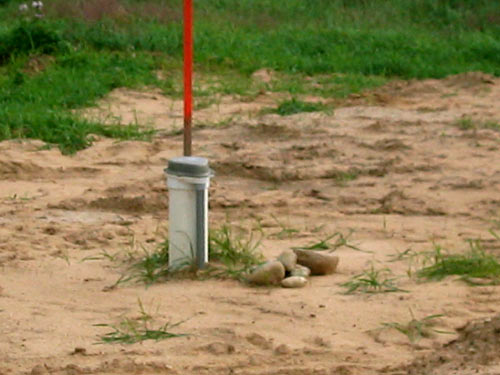
Water Well
Very Important Note: Most of the same information for wells applies to installing a septic system, if you are going to have one.
If you read chapter 2 in my book, you’ll find a checklist for buying land. Here’s a PDF copy of that checklist.
The very first and most important item on that check list is “Can you get a building permit for your building site?”
One of the steps in getting a building permit if there is no sewer available is septic system approval by the building department or health department.
I would NEVER buy a lot without knowing exactly where on the lot, the septic tank and drain field HAVE to be placed.
You can, and must, find out before finalizing your land purchase.
That’s been a deal killer more than once for me when the only place on the lot the county would approve for the septic tank drain field, was the best location for the house!
A savvy seller or Realtor will already have this researched.
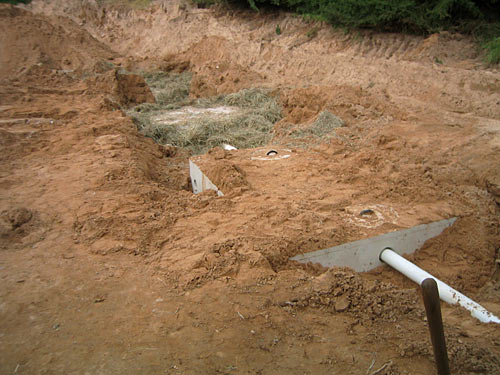
Septic tank
Wells and septic systems, if used, can be installed...continued in step number 3 of Building the House Step by Step.
Good question Mike!
Good luck with your project,
Carl Heldmann
