

Summary: Foundation wall cracks are very common. Cracked foundations develop in both concrete block foundations and poured concrete wall foundations. Cracked foundation repair can be difficult.
Carl, my house is about 70 years old and has an 8 inch concrete block foundation.
At the back corner of the house the block is about 4 feet high.
At this point, the corner of the block foundation is sinking and causing a diagonal crack. The diagonal crack is getting wider.
I thought I would try to build a block wall to the height of the existing block foundation, right up against the existing corner block foundation and about 5 feet long with much reinforcing (kind of like a retaining wall) to shore up and hopefully keep the wall from continuing to move.
As the existing foundation starts to move it will hopefully not go any further as it will be held back by the new reinforced block wall.
I thought I would make the new short retaining wall about 5 feet long and the same height as the existing, and of course pour a deep and wide footing for the new wall.
Do I need to install a couple of dowels or re-bars into the existing footing as I pour the new footing?
Does this sound like it will work, at least for another 20 years?
I do not have the finances to hire a professional!
I hope I have described this well enough for you to picture it.
Thanks, Ricky
Hi Ricky,
If it makes you feel better, hundreds of thousands homes develop foundation cracks every year, even new homes.
Home foundation repair is not easy for a do it yourselfer. And yes, foundation repair cost and foundation contractors can be expensive.
From what you described I cannot tell if the foundation is just sinking or sinking and moving inward or outward away from the house.
There are several ways a foundation can fail and I can’t tell from your information what is happening to yours.
If the foundation concrete footing fails, the foundation wall will fail. This is the usual cause of a sinking foundation. I believe this is what you are experiencing.
Another cause of cracks is if the earth adjacent to the foundation shifts and develops too much pressure on the foundation wall, the wall will bow inward and crack.
The foundation wall needs to support the weight of the house in as perfectly a vertical, parallel force, to the force of gravity as possible.
If I were you, I would have a foundation repair specialist, foundation contractor, foundation professional, or a structural engineer look at your problem, listen to your plan, and tell you what they would do and if your method would work, and if not, why it wouldn't.
You may be able to do the work yourself, but you should get this professional advice as to what to do, before you end up wasting a lot of your time and money.
Saber Concrete & Foundation Leveling Solutions is an excellent source to find out more on foundation failure.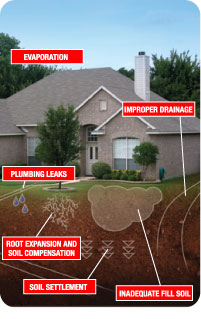
You probably could probably even use one of their methods and do the work yourself. It’s mostly labor.
Any equipment needed such as railroad jacks, for house leveling, can usually be rented and any special products like helical piers, can be purchased.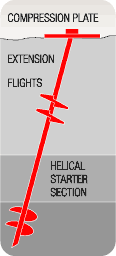
You also need to find out what caused, or is causing the problem. Again, a foundation professional should be able to pinpoint the problem.
Your home is a great investment.
Another 70 years of service is what I would shoot for, not 20 years.
Good Luck, Carl Heldmann
