
Brick Home

Mortarless Brick Veneer


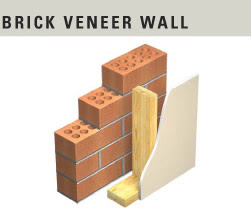
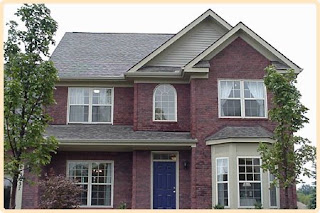
Amazingly, most people think a "brick house" is actually made from, or with brick, when actually the brick that they see on 99.9% of "brick" homes in America is a brick veneer....not that there's anything wrong with that.


The bricks may be full size but they are laid (put up) adjacent to the load bearing wood stud walls.


There is even an air space between the brick and the wall.


To call this brick veneer "siding" is also a misnomer, as the brick is real brick, 4" thick and expensive to both buy and install...until now.


Here is a solution for those who desire a brick home with less expense than a traditional brick veneer home.


The major difference is in the labor to install.


Skilled masonry work is a major cost factor for veneer brick walls.


A new exterior wall system uses concrete bricks cast in special shapes which require no mortar and can be installed by anyone with basic carpentry skills.


In most applications, the existing wall framing structure supports the weight of the bricks, so foundation ledges are not required, and the system is suitable for retrofitting existing walls.


The manufacturer states that the system provides homeowners with the luxury look of real brick exteriors at a more affordable cost.


The dimensions and appearance of the brick faces are similar to traditional split-faced bricks, and like bricks used for conventional veneer walls, they are installed in staggered rows.


Hidden from view is the unusual shape of the cast block, which allows shingle-like overlapping. Because the system does not require footings or mortar, it can be used on new or existing buildings.


Installers stack the blocks in rows and screw them to vertical furring strips attached to the wall sheathing. The furring strips provide a positive connection and create an air space, allowing the veneer surface to breathe and providing drainage for any moisture that may penetrate.


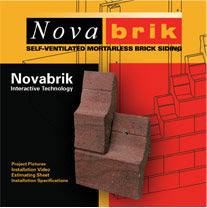
Here's aVideo from NOVABRIK INTERNATIONAL INC.

Click here or on picture to view


Thermal insulation characteristics are about the same as common face brick (R-0.11) and each unit weighs just over 4 lbs.


Because of the interlocking shape of the materials, the system requires no mortar and can be installed by a contractor, handyman, or homeowner with basic woodworking and layout skills.


U.S.Code Acceptance


The mortarless system complies with governing local codes and regulations in regard to masonry when installing units.

The concrete units have a minimum 28 day compressive strength of 3,500 psi exceeding the minimum requirements in ASTM C 90 and are classified as Type II nonmoisture-controlled units, Grade N.

The manufacturer as recommended by the Uniform Building Code has tested the performance of mortarless brick attachments under wind suction and they have exceeded the requirements for brick attachments


Installation


The manufacturer provides an installation manual to assist with project planning. It takes 6.1 blocks to cover one square foot of wall area.

Additional cast block profiles are available for inside and outside corners, and window sills.


Exterior walls must be covered with conventional OSB sheathing and barrier wrap, and fall within certain size guidelines to support the weight of the block material. Windows and openings require proper barrier flashing. Furring and starter strips are then installed on the OSB at each stud location, using corrosion-resistant screws.


To begin the installation of the brick facing, each block in the first (bottom) row requires attachment with two screws to the starter strip. From this point, each course of blocks is laid out as for a traditional brick wall.


The shape of the blocks allows subsequent rows to interlock, so that connections need to be made only on every fourth course by screwing the upper tab of the brick into the furring strips.


The installation manual outlines procedures for constructing inside and outside corners, accommodating windows, doorways, or other architectural features, and recommends terminations to the soffit.


PVC starter strip and window trim profiles are also available.


Benefits/Costs

Because the system can be installed by workers without masonry skills, the installed cost of the mortarless brick system is less than that of conventional brick walls.


According to the manufacturer the system costs about the same as high end wood siding.

All photos courtesy of NOVABRIK INTERNATIONAL INC


Like traditional split-face brick, the system is strong and durable and will not dent, chip, or fade in color.
It avoids some of the pointing (i.e., patching up mortar) and moisture problems that can occur over time when conventional mortar deteriorates.


The mortarless character of the system also limits damage that might occur from movement and cracking during settling or seismic activity.


The system resists seasonal freeze thaw cycles and water penetration by providing an interior drainage plain from the barrier wrap.


Disclaimer: The information on the system, product or material presented herein is provided for informational purposes only. The technical descriptions, details, requirements, and limitations expressed do not constitute an endorsement, approval, or acceptance of the subject matter by the U.S. Department of Housing and Urban Development (HUD/FHA), The Partnership for Advancing Technology in Housing (PATH), or any PATH-affiliated Federal agency or private company. There are no warranties, either expressed or implied, regarding the accuracy or completeness of this information. Full reproduction, without modification, is permissible.
Source: NAHB Research Center