
- Building Resources
- Construction Loans
- Cost Estimating Explained
- Cost to Build a House
- Cost to Build by State
- Energy Efficient Homes
- Foundation & Basement Information
- Heat Pumps
- Hot Water Recirculation
- House Plans, Reading
- Insulation-Calculator
- Kitchen 1- Design
- Modular vs Stick Built
- Permits, Fees, Surveys
- Radiant Heating
- Remodeling & Additions
- Shell Builders
- Siding-Cement
- Skylights
- Solar Modules
- Stair Building and Design
- Steel Framed Homes
- Subcontractors
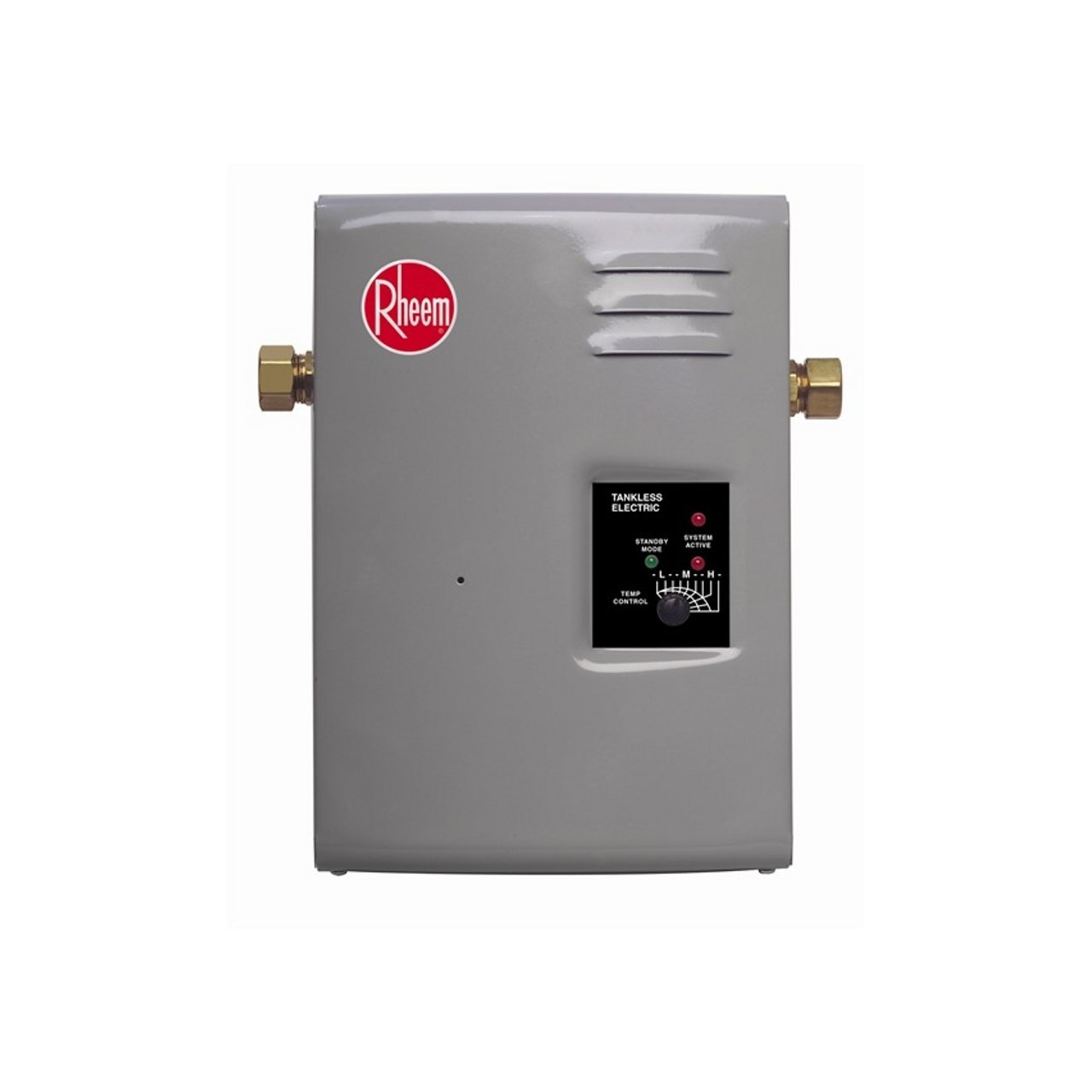
- Tankless Water Heaters
- CLICK HERE FOR HUNDREDS OF MORE CATEGORIES
- Build a House
Tankless Water Heaters
Dear Readers, water heaters are the second largest energy user in your house. (Heat & A/C are 1st).
Because we demand hot water “on demand”, water heaters must first heat our water, and then sit there for 90% of the day (or more) keeping the water hot in a tank until someone in the house needs hot water. What a waste!
Solution? Tankless Water Heaters.
At the bottom of the page is a video on Tankless Water Heaters.
And here is the best research article on the subject:
Enjoy,
Carl
Tankless Water Heaters, from NAHB Research:
“Throw away your water heater tank and shave ten to twenty percent off your water heating bill. That savings results from elimination of standby losses -- energy lost from warmed water sitting in a tank. And, since water heating accounts for about 14 percent of the average U.S. household energy budget, this can be a significant loss.
Tankless water heaters provide hot water at a preset temperature when needed without storage, thereby reducing or eliminating standby losses. Tankless water heaters can be used for supplementary heat, such as a booster to a solar hot water system, or to meet all hot water needs.
Tankless water heaters have an electric, gas, or propane heating device that is activated by the flow of water. Once activated, the heater provides a constant supply of hot water.
The maximum flow rate at a desired temperature will be determined by the capacity of the heater.
Gas tankless water heaters typically have larger capacities than electric tankless water heaters.
Large units intended for whole house water heating are located centrally in the house while, in point-of-use applications, the water heater usually sits in a closet or under a sink.
Tankless water heaters are rated by the maximum flow rate at which a desired temperature rise is met. Special features may allow the user to set the delivery temperature.
Efficiency is higher than an equivalent tank type water heater because standby losses are virtually eliminated.
Electric tankless water heaters require a relatively high electric power draw because water must be heated quickly to the desired temperature.
Residential gas models are available that can heat more than five gallons per minute by 60°F, generally more than enough for two showers to be run simultaneously. Whole house electric units typically have a capacity closer to three gallons per minute.
Efficiency is higher than most tank type water heaters because standby losses are virtually eliminated. In addition, sealed combustion gas units have a higher fuel-burning efficiency than natural draft gas water heaters.
PATH Field Evaluations have shown that energy usage can be decreased by 10 to 20 percent compared to a conventional water heater. Energy savings (as a percentage of total hot water energy use) are greater in homes that use less hot water energy.
Tangential environmental benefits, besides energy savings, include smaller units that use fewer materials and subsequent lower transportation energy consumption.
New construction is the optimum time to introduce tankless water heaters in order to maximize the benefits and minimize first cost. Heaters can be centrally located in the house, in order to minimize hot water runs. Additionally, electric wiring and/or venting can be most easily implemented at this time.
Important Remodeling Note:
Transitioning from the use of conventional water heaters to tankless systems can be difficult in an existing home. Electric heaters usually will need four times the electricity to operate.
This will require additional wiring and possibly a higher capacity main electric panel. Many gas tankless manufacturers recommend a direct vent – this will bring in fresh air from outside for combustion and vent the flue gas using a blower through a side wall.
Initial Cost:
The installation costs of tankless water heaters are from 2 - 4 times higher than tank-type water heaters. For gas tankless hot water heaters, the same gas supply line and/or venting may need to be sized larger than for a typical gas tank.
Electric tankless water heaters draw more power and will require multiple circuits and/or heavier cable, which will increase installation costs. Water connections for both are comparable or identical to those used on tank-type water heaters. In some cases, the temperature and pressure (T&P) valve necessary for tank systems may not be required for a tankless heater. (Check with your local code official)
Gas and electric whole-house tankless water heaters are more expensive than typical tank systems except when comparing to high efficiency tank systems. In these cases, the high efficiency tanks may be close in cost to the tankless systems.
Tankless water heaters range in price from $200 for a small under-sink unit up to $1200 for a gas-fired unit that delivers 5 gallons per minute. Typically, the more hot water the unit produces, the more it will cost.
Operational Cost:
Electric tankless water heaters generally cost 10-20% ($40 - $80/yr) less to operate than comparable tank-type water heaters. Gas savings may be about 20 -40% ($50-$100/yr). Equipment life may be longer than tank-type heaters because they are less subject to corrosion. Expected life of tankless water heaters is 20 years, compared with between 10 and 15 years for tank-type water heaters.
U.S.Code Acceptance:
Tankless water heaters can be used to replace tank systems almost anywhere. Code restrictions concerning use of a T&P valve may apply in some areas. Venting, airflow and spacing requirements that might limit the location of the tankless water heater will be dependent on the manufacturer's installation requirements and should be followed precisely.
Installation:
The installation of tankless water heaters is very similar to their tank-type counterparts. Water, gas, and electrical connections are nearly identical to tank-type units. Multiple circuits and heavier wire may be necessary for electrical models due to the higher instantaneous current draw. Physically, the units are usually hung on the wall.
For point of use units, they are often installed under sinks, in closets, or in other locations where they can be accessed. Typically electrical units are used for these installations, and given their smaller size, can often operate off of a standard outlet. In this case, the plumbing must be designed and installed with the hot water line for the room separated from the whole-house hot water system.
Warranty:
The warranties of tankless water heaters are generally longer than those of comparable tank-type units. Typical limited warranties are 2-5 years for the unit, and 7-10 years for the heat exchanger. Expected life of tankless water heaters is 20 years, compared with between 10 and 15 years for tank-type water heaters.
Benefits/Costs:
Tankless water heaters are compact in size and virtually eliminate standby losses. They can provide warm water at remote points of use and less water is wasted while waiting for warm water to reach a remote faucet. A tankless water heater can provide unlimited hot water as long as it is operating within its capacity.
Equipment life may be longer than tank-type heaters because less subject to corrosion. Expected life of tankless water heaters is 20 years, compared with between 10 and 15 years for tank-type water heaters.
Tankless water heaters range in price from $200 for a small under-sink unit up to $1200 for a gas-fired unit that delivers 5 gallons per minute. Typically, the more hot water the unit produces, the higher it will cost.
In most cases, electric tankless water heaters will cost more to operate than gas tankless water heaters.”
Disclaimer: The information on the system, product or material presented herein is provided for informational purposes only. The technical descriptions, details, requirements, and limitations expressed do not constitute an endorsement, approval, or acceptance of the subject matter by the U.S. Department of Housing and Urban Development (HUD/FHA), The Partnership for Advancing Technology in Housing (PATH), or any PATH-affiliated Federal agency or private company. There are no warranties, either expressed or implied, regarding the accuracy or completeness of this information. Full reproduction, without modification, is permissible. NAHB Research